

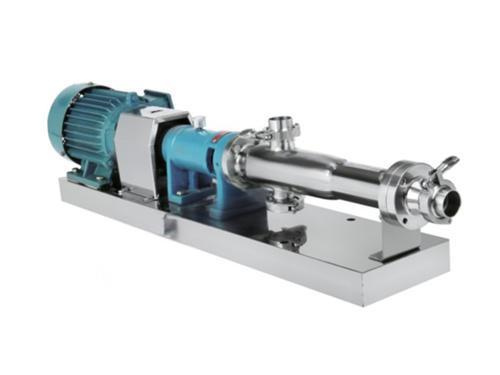
Efficient sludge pumping is essential for every wastewater treatment plant, industrial effluent facility,
and sludge handling system. Among various sludge pump technologies, the sludge screw pump
(often referred to as a progressive cavity pump or eccentric screw pump) has become a key solution for
reliable, low-shear and energy-efficient sludge transfer. This in-depth guide explains how
to optimize sludge pumping performance with a sludge screw pump, covering definitions, working principles,
design considerations, sizing, operation and maintenance.
A sludge screw pump is a positive displacement pump that uses a helical rotor turning
inside an elastomer stator to convey viscous media such as sewage sludge, digested sludge,
thickened sludge, and dewatered sludge cake. The pumping action is created by sealed cavities that progress
from the suction side to the discharge side as the rotor turns.
In the context of sludge pumping, screw pumps are widely used in:
The sludge screw pump is favored because it provides:
Understanding the working principle of a sludge screw pump is critical for optimizing sludge pumping.
A typical sludge screw pump consists of:
As the rotor rotates inside the stator, cavities are formed and sealed. These cavities move in the
axial direction, transporting the sludge from the suction port to the discharge port. Because the cavities
are nearly constant in size, the sludge flow remains smooth and continuous. The flow rate is directly
proportional to the speed of rotation, which makes the sludge screw pump very controllable.
| Aspect | Sludge Screw Pump | Centrifugal Pump |
|---|---|---|
| Pump Type | Positive displacement | Dynamic (kinetic) |
| Best for Viscosity | Medium to very high viscosity sludge | Low to medium viscosity liquids |
| Solids Handling | Excellent, large solids & fibrous material | Limited, risk of clogging |
| Shear on Sludge | Low-shear, gentle pumping | Higher shear, can break flocs |
| Flow Characteristics | Constant, proportional to speed | Variable with pressure and head |
| Suction Capability | Good self-priming capability | Requires flooded suction or priming |
| Energy Efficiency at High Viscosity | High efficiency | Low efficiency |
Optimizing sludge pumping starts with understanding the type and characteristics of the sludge being
transferred. A sludge screw pump can handle a wide range of sludge types:
Primary sludge from sedimentation tanks typically has a solids content of 2–5% dry solids (DS).
It contains settleable organic and inorganic solids. A sludge screw pump is effective for pumping primary
sludge to digesters or thickening units with minimal shear.
Waste activated sludge (also called surplus sludge) usually has 0.8–2% DS. It is more biological and
has a floc structure that can be damaged by high-shear pumps. A sludge screw pump provides gentle pumping,
thus protecting the sludge structure important for dewatering performance.
After gravity thickening, flotation thickening, or mechanical thickening, sludge can reach 4–8% DS
or more. Viscosity and yield stress become high, requiring a robust sludge pumping solution. A sludge
screw pump can reliably move thickened sludge to digesters, storage tanks, or dewatering units.
Anaerobically or aerobically digested sludge often has 2–6% DS. Gas release and changes in viscosity
can complicate sludge pumping. The self-priming capability and smooth flow of a sludge screw pump help
maintain stable digested sludge transfer.
Dewatered sludge cake from decanter centrifuges, belt filter presses, and chamber filter presses can
reach 18–35% DS or more. This highly viscous, non-Newtonian cake is extremely difficult to pump with
traditional technologies. Special sludge cake screw pumps with enlarged inlets,
bridge-breakers, and robust screws are designed for this duty.
| Sludge Type | Typical DS (%) | Viscosity Level | Recommended Screw Pump Features |
|---|---|---|---|
| Primary Sludge | 2–5 | Low to medium | Standard inlet, standard rotor/stator, moderate speed |
| Waste Activated Sludge | 0.8–2 | Low | Gentle pumping, low speed, variable frequency drive for control |
| Thickened Sludge | 4–8 | Medium to high | Reinforced stator, lower speed, higher torque, suction hopper optional |
| Digested Sludge | 2–6 | Medium | Gas-handling capability, venting, robust seals |
| Dewatered Sludge Cake | 18–35+ | Very high | Enlarged rectangular hopper, bridge-breaker, heavy-duty rotor, low speed high torque |
A sludge screw pump offers several operational and economic advantages that directly contribute to
optimized sludge pumping.
The progressive cavity design handles high solids sludges without significant loss of capacity. High
viscosity, sticky and shear-sensitive sludge can be transferred without dilution, minimizing water
consumption and maintaining overall sludge processing efficiency.
Sludge screw pumps provide low internal shear because the sludge is transported in enclosed cavities.
This low-shear pumping:
Flow is almost directly proportional to rotation speed. This allows precise control of sludge feed to:
Stable sludge flow is essential for process optimization, chemical dosing accuracy, and energy-efficient
system operation.
For low-viscosity liquids, centrifugal pumps can be very efficient. However, for medium to high viscosity
sludge, a sludge screw pump generally offers better energy efficiency because:
The sludge screw pump can self-prime and generate a suction lift, making it suitable for installations
where the sludge level varies, where pits or wells are involved, or where flooded suction is not always
guaranteed.
Sludge screw pumps are available in horizontal, vertical, and hopper-type configurations. This flexibility
allows easy integration into:
To optimize sludge pumping with a sludge screw pump, correct pump selection is essential. Important
design and selection criteria include:
Define the minimum, normal, and maximum sludge flow. Consider:
Total dynamic head for sludge pumping includes:
Accurate calculation of TDH is vital for selecting the right sludge screw pump size and drive power.
Characterize the sludge being pumped:
These properties affect rotor/stator selection, material choice, pump speed and torque requirements.
For sludge pumping, operating at lower rotational speeds often increases service life and reliability.
However, adequate torque is needed to overcome the resistance of thick sludge and dewatered cake.
Using a VFD to control the motor allows fine tuning of sludge flow while keeping speed within acceptable
wear limits.
Sludge can be abrasive, corrosive, or chemically aggressive depending on the application. Common materials
in a sludge screw pump include:
For pumpable sludges (up to around 8–10% DS), a standard round suction inlet is usually sufficient.
For dewatered sludge cake, an open hopper with augers or bridge-breakers is recommended to ensure
proper sludge feeding to the rotor and stator.
| Parameter | Typical Range for Sludge Service | Impact on Pump Selection |
|---|---|---|
| Flow Rate | 1–400 m3/h (varies widely by plant size) | Determines pump size and rotor geometry |
| Total Dynamic Head | 5–60 m (sludge systems can be moderate to high) | Determines stages, torque and power |
| Solids Content | 0.8–35% DS | Affects inlet design, rotor/stator selection and speed |
| Operating Speed | 50–400 rpm | Influences wear, shear, and flow control |
| Temperature | 5–80°C (typical sludge applications) | Affects elastomer selection and expansion allowances |
| Viscosity | From a few hundred to several hundred thousand cP | Impacts power, torque and inlet configuration |
Optimizing sludge pumping with a sludge screw pump is not only about the pump itself. The entire sludge
pumping system needs to be considered, including pipelines, valves, instrumentation, and control strategy.
Appropriate pipeline design helps reduce energy consumption, minimize blockages, and enhance pump life.
Key considerations:
Sludge can settle in valves and fittings, so full-bore valves and gentle transitions are preferred.
Isolation valves should be installed for maintenance, and non-return valves may be required to protect
the pump and the system.
To optimize sludge screw pump operation, a range of instruments can be integrated:
These measurements support sludge pump optimization by enabling:
Integrating a sludge screw pump with a VFD is highly recommended. Benefits include:
Once a sludge screw pump is installed, proper operation is crucial to maintain optimized sludge pumping
performance throughout the life cycle.
During initial commissioning:
Dry running can cause rapid stator damage in a sludge screw pump. Protection methods include:
Adjust pump speed with a VFD or control valves to match required sludge flow. When possible, use speed
control rather than throttling, as it is more efficient and reduces wear.
In many plants, sludge properties change with time of day, load fluctuations, or seasonal variations.
Operators can optimize sludge pumping by:
Optimizing sludge pumping also means minimizing downtime and maximizing pump life. Sludge screw pump
maintenance focuses on wear components, correct lubrication, and monitoring.
The rotor and stator are the primary wear parts in a sludge screw pump. Wear results from:
Selecting the correct materials and avoiding operation outside design conditions greatly extend service life.
Mechanical seals, packing and bearings protect against leakage and support the rotating assembly. For
sludge service:
A structured maintenance schedule for a sludge screw pump helps prevent unexpected failures. Typical tasks:
| Frequency | Task | Purpose |
|---|---|---|
| Daily | Check suction and discharge pressure readings | Identify early signs of blockage or abnormal operation |
| Daily | Observe for leaks around seals and connections | Prevent environmental contamination and equipment damage |
| Weekly | Verify lubrication of motor and bearing housings | Reduce wear and overheating |
| Monthly | Inspect coupling alignment and fasteners | Maintain mechanical integrity and efficiency |
| Quarterly | Inspect rotor and stator condition (if accessible) | Plan for replacement before critical wear occurs |
| Annually | Comprehensive inspection and functional test | Confirm long-term reliability of sludge pumping system |
To ensure continuous sludge pumping:
The life-cycle cost of a sludge screw pump includes capital expenditure, energy consumption,
maintenance, and downtime. Optimizing sludge pumping reduces total cost of ownership.
Oversized pumps running at excessively low speeds may lead to poor efficiency and higher investment
costs. Undersized pumps may run at high speeds, increasing wear. Selecting the optimum size and
operating range is fundamental to sludge pump optimization.
Each sludge screw pump has an efficiency range where wear, power consumption, and reliability are
balanced. Operating within this range, achieved through VFD control and careful system design, yields
lower energy bills and extended component life.
Stable, low-shear sludge pumping with a sludge screw pump helps prevent blockages in downstream
equipment. Fewer unplanned stops and lower cleaning requirements translate to significant cost savings.
When specifying a sludge screw pump for a project or plant upgrade, a clear and structured technical
specification helps ensure the selected pump meets performance requirements.
| Item | Specification | Notes / Options |
|---|---|---|
| Pump Type | Progressive cavity, single-screw rotor, elastomer stator | Designed specifically for sludge pumping |
| Medium | Municipal/industrial sludge | Indicate type: primary, WAS, thickened, digested, dewatered |
| Flow Rate | X m3/h normal, Y m3/h max | Specify min, normal and peak flow |
| Total Dynamic Head | Z m | Include static and friction components |
| Solids Content | Up to A% DS | Define expected range |
| Viscosity | Approximate or range based on sludge | Important for power and inlet configuration |
| Operating Temperature | B – C °C | Determine elastomer suitability |
| Rotor Material | Stainless steel or alloy steel | With anti-wear or corrosion-resistant coating if needed |
| Stator Material | NBR, EPDM, or special elastomer | Resistant to chemicals and temperature |
| Housing Material | Cast iron / stainless steel / coated steel | Depending on corrosion conditions |
| Seal Type | Mechanical seal or packed gland | Configured for sludge service |
| Drive | Electric motor with gearbox | Suitable for VFD operation |
| Speed Range | From D to E rpm | Adjusted via VFD or geared drive |
| Installation Orientation | Horizontal / vertical / hopper | As required by site layout |
| Inlet Type | Standard flange / open hopper | Hopper recommended for dewatered sludge |
| Protection | Dry run protection, overpressure relief | Integrated with plant control system |
| Instrumentation | Pressure gauges, flow meter, level switches | To support optimized sludge pumping control |
Safety is fundamental in sludge handling and sludge pumping. Sludge screw pumps should be installed
and operated with appropriate safety measures:
Optimized sludge pumping with a sludge screw pump also contributes to environmental performance and
regulatory compliance. Benefits include:
By ensuring reliable and efficient sludge screw pump operation, plants can better meet discharge limits
and resource recovery objectives.
To summarize key best practices for optimizing sludge pumping with a sludge screw pump:
Implementing these measures ensures that the sludge screw pump remains a reliable and energy-efficient
component of the sludge treatment process.
The sludge screw pump is a proven and versatile solution for sludge pumping in
municipal and industrial wastewater treatment, sludge thickening, digestion, and sludge dewatering
systems. By understanding the principles of operation, selecting the correct design, and applying
best practices in installation, operation, and maintenance, operators can fully optimize sludge pumping
performance.
Whether the application involves primary sludge, waste activated sludge, thickened sludge, digested
sludge or highly concentrated dewatered sludge cake, the sludge screw pump offers a combination of
gentle handling, stable flow, and robust solids-handling capability that is difficult to match with
other technologies. When correctly sized and properly operated, it becomes a central element in
achieving reliable, cost-effective and environmentally sound sludge management.
```

Copyright ? Jiangsu Longjie Pump Manufacturing Co., Ltd.



 Phone
Phone
Comment
(0)